⛽📉 MIDDLE EAST CONFLICT HITS GAS STATIONS! Trump’s Economic Approval CRASHES to 31% – Americans Feel the PAIN as Poll Shows NEW LOW!
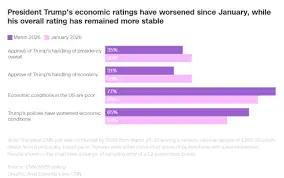
The ripple effects of the Middle East conflict are no longer confined to battlefields and diplomatic chambers – they have arrived at your local gas station. And according to a devastating new U.S. public opinion poll released on April 1, 2026, President Donald Trump is paying the political price. Trump’s approval rating on economic issues has plummeted to a term-low 31%, with Americans citing skyrocketing gasoline prices as a primary source of financial distress. The survey, conducted by a leading polling firm and reported by financial news outlets, reveals that nearly two-thirds of Americans (65%) believe the current administration’s policies have worsened the nation’s economic situation – a 10-point increase since January alone.
The poll, which surveyed over 1,200 respondents between March 26 and 30, carries a margin of error of ±3.2%. It found that more than 60% of Americans indicated that rising gasoline prices have caused them personal financial difficulties, and 15% said those difficulties are “extremely serious.” For millions of households, the combination of higher fuel costs, persistent inflation, and stagnant wages has created a perfect storm of economic anxiety. “I’m paying $80 to fill up my truck,” said a respondent from Ohio quoted in the poll summary. “Two years ago it was $45. Something has to change.”
The timing could not be worse for Trump. The poll was released just hours before his planned national address on Iran, a speech intended to rally support for his administration’s aggressive posture in the Middle East. But instead of focusing on foreign policy victories, the White House is now scrambling to address pocketbook issues. “The American people are smart,” said a Democratic strategist. “They know that when you poke a hornet’s nest in the Gulf, gas prices go up. Trump’s Iran policy might be popular with hawks, but it’s killing families at the pump.”
Trump’s overall approval rating stands at 35%, just one percentage point above his all-time low in CNN polling. But the erosion on the economy is particularly dangerous, as economic concerns have consistently ranked as the top issue for voters since the COVID-19 pandemic. The poll found that only 27% of Americans approve of Trump’s handling of inflation, a staggering drop from 44% a year ago. Even among Republicans, the numbers are grim: the share of GOP voters who strongly approve of Trump’s job performance has fallen to 43%, from 52% in January. And nearly 3 in 10 Republicans now say Trump’s policies have worsened economic conditions – more than double the 13% who thought so in January.
The White House pushed back, with Press Secretary Karoline Leavitt blaming “global supply chain disruptions” and “the Biden administration’s energy policies” for the price spikes. But that argument appears to be falling flat. “Voters hold the president responsible for what happens on his watch,” said a political scientist quoted by Futunn News. “Trump promised to bring back cheap gas and a booming economy. Instead, they’re seeing the opposite. That’s a betrayal of his core promise.”
With midterm elections approaching and Democrats already preparing campaign ads featuring gas station price signs, the Trump administration faces an uphill battle to regain economic credibility. Some advisors are urging a shift in messaging – emphasizing domestic energy production, releasing oil from the Strategic Petroleum Reserve, or even negotiating a temporary ceasefire in the Middle East. But Trump, known for doubling down rather than pivoting, is expected to use his Iran speech to blame his predecessors and the media. Whether that strategy will halt his sinking approval remains to be seen. One thing is clear: as long as gas prices stay high, Trump’s poll numbers are likely to stay low. And with 2026 shaping up to be a referendum on his economic stewardship, the White House is running out of time to turn things around.